 See photos and updates from listings directly in your feed
 Share your favorite listings with friends and family
 Save your search and get new listings directly in your mailbox before everybody else
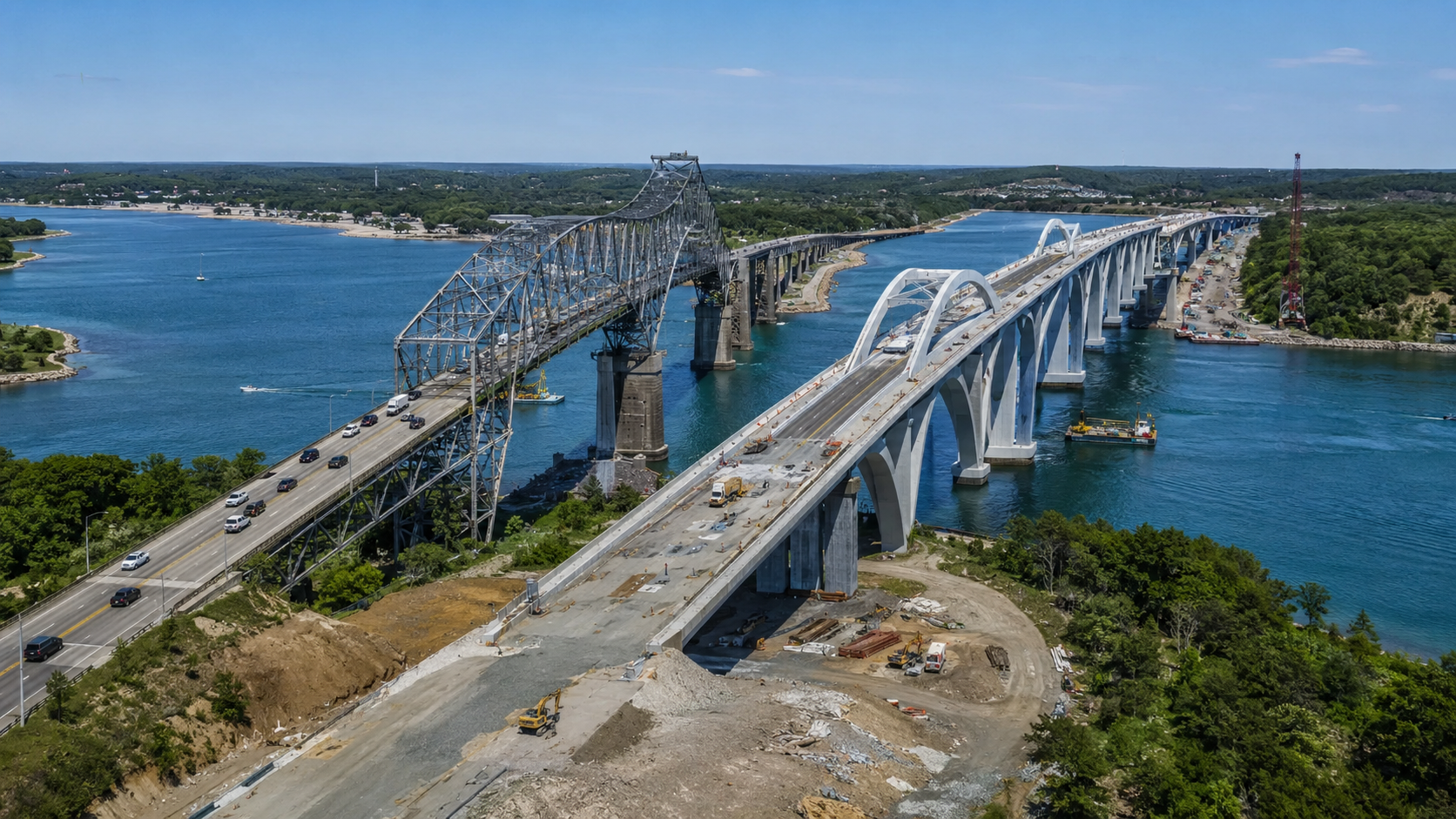
Construction on the new Sagamore Bridge is set to begin in late 2027. That is no longer a rumor or a projection. MassDOT has completed foundation load testing, is finalizing the selection of the design-build contractor, and expects to award a construction contract by the end of this year. The crane you saw looming over the canal this spring was not decoration. The project is real, the funding is secured, and the clock is running.
Last week, Representative Kip Diggs posted on LinkedIn about the passage of a bipartisan commission through the Massachusetts House — a direct legislative response to the construction project. The commission, created under the Mass Wins Act, will bring together experts from MassDOT, the MBTA, the Cape Cod Chamber of Commerce, the Cape Cod Regional Transit Authority, and municipal governments from Bourne, Wareham, Sandwich, and surrounding towns. Its mandate: ensure Cape Cod does not bear the economic disruption of this construction alone.
Rep. Diggs put it plainly. “The Sagamore must be replaced, but Cape Cod cannot be left to absorb the economic disruption alone.”
That sentence deserves to be the starting point for every conversation about this project — including the real estate conversation.
What Is Actually Being Built and How Long It Will Take
The new Sagamore Bridge will be built just west of the existing structure, on the inboard side of the canal. It will consist of two separate side-by-side spans — a design that allows one span to be completed and opened to traffic before the existing bridge is demolished. The main spans will be constructed off-site, floated in on the canal, and lifted into place.
The total project timeline is eight to ten years from the start of construction. If the contractor is awarded by late 2027 as planned, Cape Cod is looking at construction activity through approximately 2035 to 2037.
Here is the question everyone is asking: will the old bridge stay open during construction?
The answer from MassDOT is clear and consistent: two lanes in each direction will remain open throughout the entire construction period. MassDOT has committed to keeping two lanes in each direction open throughout the construction phase, “so the people of Cape Cod and five million visitors annually will be able to travel over a new bridge.” The existing Sagamore Bridge will not be closed while the new one is built. Traffic will be maintained. The Cape will remain accessible. CBS News
That commitment matters enormously for everything that follows.
The Economic Stakes Are Not Abstract
Cape Cod has 15 towns, 230,000 year-round residents, 10,000 businesses, five to seven million visitors per year, and generates over $259 million in annual state and local taxes. Every dollar of that economic activity flows over two bridges. Capenews
The Sagamore Bridge handles traffic from Boston and Route 3. The Bourne Bridge handles traffic from Providence and Route 25. Between them, they carry more than 35 million vehicles per year. They are not just infrastructure. They are the economic lifeline of an entire regional economy.
Which is why the second half of this story matters as much as the first. The two bridges need to be replaced or rehabilitated by 2029, and while funding has been secured for the Sagamore Bridge, funding for the Bourne Bridge has not been secured. The Army Corps of Engineers has identified the Bourne Bridge as needing rehabilitation by 2029 — and if federal funding is not secured, the Corps may be forced into a major overhaul that requires closing the Bourne Bridge for six months or more. NBC Boston
The Cape Cod Chamber of Commerce put a number on that scenario. “The bottom line is we would lose a third of our economy,” said Paul Niedzwiecki. One business owner called it “economic Armageddon.” That is not hyperbole. It is arithmetic. One bridge closed plus one bridge under construction equals a peninsula that is, functionally, half-accessible. For a tourism economy that operates on summer weekends, half-accessible is catastrophic. NBC Boston
The new commission Rep. Diggs helped create is the right response to this risk. Getting MassDOT, the MBTA, the Chamber, and municipal governments around the same table before construction begins — rather than after — is exactly the kind of proactive planning that can mean the difference between a manageable disruption and a decade-long economic wound.
What This Means for Cape Cod Real Estate
I wrote about the Sagamore Bridge project back in June when the foundation load testing began. The core argument then was that this project is a long-term tailwind for Cape Cod property values — better access, modern infrastructure, a pedestrian and bicycle crossing that does not currently exist, and an expanded buyer pool on the other side of construction.
That argument holds. But the construction period itself introduces variables that buyers and sellers need to think through honestly.
For properties near the bridge corridor — particularly in Bourne — the construction years will bring noise, equipment, altered traffic patterns, and reduced visual appeal. We have already seen eminent domain acquisitions in the Round Hill neighborhood for properties within the construction footprint. Buyers looking in that specific zone need an agent who understands exactly where the project boundaries are and what the new roadway footprint will look like. This is not the time to rely on a listing agent who found the property on Zillow.
For the broader Cape Cod market, the construction period is more nuanced. MassDOT’s commitment to two lanes in each direction throughout construction means the Cape remains accessible. Five million visitors per year will still come. The summer economy will still function. The buyers who are avoiding Cape Cod real estate because they are worried about construction-period access are likely overcorrecting.
The more legitimate concern is the funding gap for the Bourne Bridge. If Congress does not reauthorize the Bridge Improvement Program that funded the Sagamore side, and the Bourne Bridge requires a forced closure for rehabilitation, the economic impact on the Cape would be severe enough to affect property values in ways that construction alone would not. That is the variable worth watching — not the Sagamore construction itself, but the status of the Bourne Bridge funding.
The Long View
The buyers who are thinking about Cape Cod real estate on a ten-year horizon — which is exactly the right way to think about it — should see this project for what it is: one of the most significant infrastructure investments in the region’s history, moving through its most disruptive phase, on the way to a permanently better outcome.
Better bridges mean more reliable access. More reliable access means a wider buyer pool. A wider buyer pool means sustained demand for a supply of desirable properties that, by definition, cannot grow. The towns closest to the bridge — Bourne, Sandwich, Falmouth — stand to benefit most directly from improved access as the project completes.
Rep. Diggs is right that Cape Cod cannot absorb this alone. The commission he helped create is the region’s best tool for making sure it does not have to. For buyers and sellers navigating this period, the equivalent tool is an agent who understands what is happening at the ground level — not just the MassDOT press releases, but the property-by-property reality of what this project means for specific neighborhoods, specific price points, and specific timelines.
That is the conversation we have been having with clients since this project began moving. If you want to have it too, you know where to find us.
508-420-8800 · thegriffin.co
Griffin Realty Group serves buyers and sellers across the Boston metro and Cape Cod luxury real estate markets.


