 See photos and updates from listings directly in your feed
 Share your favorite listings with friends and family
 Save your search and get new listings directly in your mailbox before everybody else
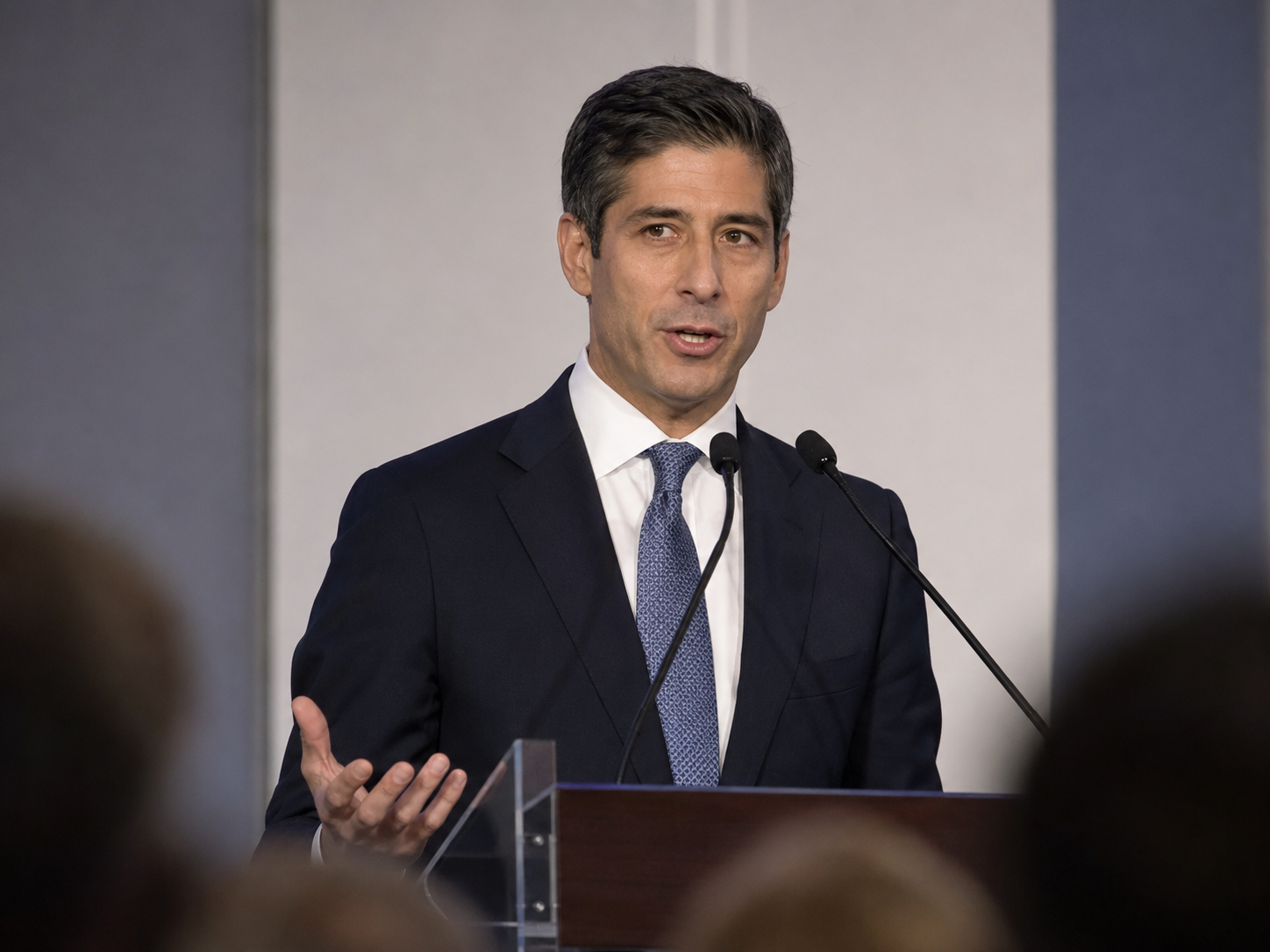
Kevin Warsh held his first press conference as Federal Reserve Chair this afternoon. Markets did not like what they heard. The Dow dropped over 500 points. The S&P fell more than 1%. Two-year Treasury yields jumped 16 basis points — the highest level in over a year. The dollar surged. Gold cratered.
And if you are buying or selling real estate in Boston or on Cape Cod, you need to understand exactly what just happened — and what it means for you.
What Actually Happened Today
The headline is simple: the Fed held rates steady at 3.50% to 3.75%. Unanimous vote. No surprise there.
The substance is anything but simple.
Warsh walked into that press conference and did three things that Wall Street and Main Street need to absorb.
First, he stripped out the easing bias. For months, the Fed’s official statement included language signaling that rates would eventually come down. That language is gone. The new statement is neutral — rates could move in either direction depending on the data. The presumption of cuts has been officially retired.
Second, nine of eighteen Fed officials now project a rate hike before the end of 2026. Let that land. Not a hold. Not a cut. A hike. Half the committee thinks borrowing costs need to go higher, not lower. This shift shows up in what Wall Street calls the “dot plot”—a chart the Fed releases four times a year in which each official anonymously marks a dot indicating where they personally expect rates to be at year-end. Think of it as a simple show of hands: how many people at the Fed think rates should go up, stay flat, or come down? In March, most dots pointed toward cuts. Today, the majority point toward a hike. That is a complete reversal of the committee’s collective outlook in ninety days.
Third, Warsh himself refused to submit a dot at all—he was the only entry missing from the chart. He did this deliberately, as a philosophical statement that the Fed should stop telegraphing its every move to markets. When asked directly about the future path of rates, his answer was essentially: I have nothing to add beyond what the committee’s statement says. That was not evasiveness. That was a warning shot. The era of the Fed hand-holding investors through every decision is over.
His inflation message was the clearest of all. “The commitment to deliver price stability is strong, unanimous, and unambiguous,” Warsh said. “That’s an important message we’ve missed for five years. And we’re going to fix that.”
The two in the two percent inflation target, he said, is to the left of the decimal point. For now, zero is to the right.
That is not a man who is thinking about cutting rates.
Why Inflation Is Staying Elevated
The Fed does not exist in a vacuum, and today’s data environment is genuinely difficult.
CPI hit 4.2% in May — the highest reading since April 2023. The Iran conflict drove energy prices sharply higher for months, and energy flows through everything: manufacturing costs, transportation, food prices, and utility bills. The US-Iran ceasefire announced Sunday, and the reopening of the Strait of Hormuz have eased some of that pressure — mortgage rates actually ticked down slightly this week on that news — but the cumulative inflation damage from fifteen weeks of conflict does not disappear overnight.
PCE, the Fed’s preferred inflation measure, printed at 3.8% in April. The Fed’s target is 2%. There is a long way to go, and Warsh made clear he has no intention of taking his foot off the brake until the numbers prove it is warranted.
What This Means for Mortgage Rates
Here is the direct translation for anyone watching their monthly payment.
Mortgage rates track the 10-year Treasury yield, not the Fed funds rate directly. But today’s market reaction — 2-year yields up 16 basis points, 10-year yields up 4 basis points — tells you where the bond market is repositioning. The 30-year fixed was already sitting around 6.52%, near its 2026 high. Today’s hawkish pivot does not help that number.
The markets that had been quietly hoping for rate relief in the second half of 2026 just had those hopes erased. Traders are now pricing a 60% chance of a rate hike in October. If that hike materializes, mortgage rates are moving higher, not lower.
The buyers who have been waiting for rates to fall before making their move need to reckon with this reality: the rate environment you are waiting for may not arrive in 2026. It may not arrive in 2027. And while you wait, inventory in Boston and on Cape Cod does not stand still.
What This Means for Boston Real Estate
Boston’s luxury market is driven by necessity as much as desire. Corporate relocations, career moves, family transitions — these buyers move because they have to, not because conditions are perfect. That buyer pool does not evaporate because the Fed gets hawkish.
What changes is the calculus for discretionary luxury buyers — the buyers who could buy now but are choosing to wait for better conditions. Today’s Warsh press conference should be read as a direct communication to those buyers: better conditions are not coming on the timeline you imagined.
In a supply-constrained market like Boston — where the inventory of truly desirable properties in Back Bay, Beacon Hill, Brookline, and Newton is structurally limited — elevated rates thin the buyer pool, but they do not eliminate it. They shift leverage toward prepared buyers who can move decisively. The buyer who is pre-qualified and ready to act in the next 90 days is competing against fewer people than they would in a rate-cut environment. That is a real advantage.
For sellers in Boston, the message is equally clear. Pricing precision matters more, not less, in a higher-for-longer rate environment. A property that is priced aggressively may sit. A property priced with surgical accuracy will find its buyer even in this environment, because the buyers in the market right now are serious, qualified, and motivated — not casually browsing.
What This Means for Cape Cod Real Estate
Cape Cod is more rate-sensitive than Boston because a larger share of its buyer pool is discretionary. The family from Wellesley who has been thinking about a summer home does not have to buy, and in a higher-for-longer rate environment, some of them will choose not to.
That is real. I am not going to pretend otherwise.
But here is what I also know from thirty years in this market: the buyers who wait out every rate cycle on Cape Cod consistently look back and wish they had bought earlier. The supply of genuinely desirable Cape Cod properties — oceanfront, near-water, in the right towns — does not grow. It shrinks. Every year, more estates are subdivided, more conservation restrictions are added, and more of the best land is permanently preserved. The pool of what you can actually buy gets smaller, not larger, while you wait.
The Sagamore Bridge replacement is fully funded and moving toward a 2027 construction start. The long-term accessibility story for Cape Cod is improving. Buyers who position themselves ahead of that infrastructure narrative — before it fully materializes in pricing — have historically made the stronger call.
And today, with some Cape Cod buyers retreating to the sidelines on rate concerns, the buyers who remain in the market are negotiating with less competition. That is the window that Warsh’s press conference accidentally created.
The Bottom Line
Kevin Warsh walked into that press conference today and changed the conversation. Cuts are off the table. Hikes are on it. The easing bias is gone. And the new Fed Chair made clear that price stability is the mission — not market comfort, not political accommodation, not the rate environment that buyers have been hoping for.
This is the environment we are operating in. Not the one we wanted. The one we have.
The buyers and sellers who will do best in this environment are the ones who stop waiting for conditions to change and start making decisions based on conditions as they actually are. That means knowing your number precisely, understanding what the market will actually bear at today’s rates, and working with an agent who will give you an honest read — not the read you want to hear.
That is the conversation we have every day at Griffin. If you want it, you know where to find us.
508-420-8800 · thegriffin.co
Griffin Realty Group serves buyers and sellers across the Boston metro and Cape Cod luxury real estate markets.


