 See photos and updates from listings directly in your feed
 Share your favorite listings with friends and family
 Save your search and get new listings directly in your mailbox before everybody else
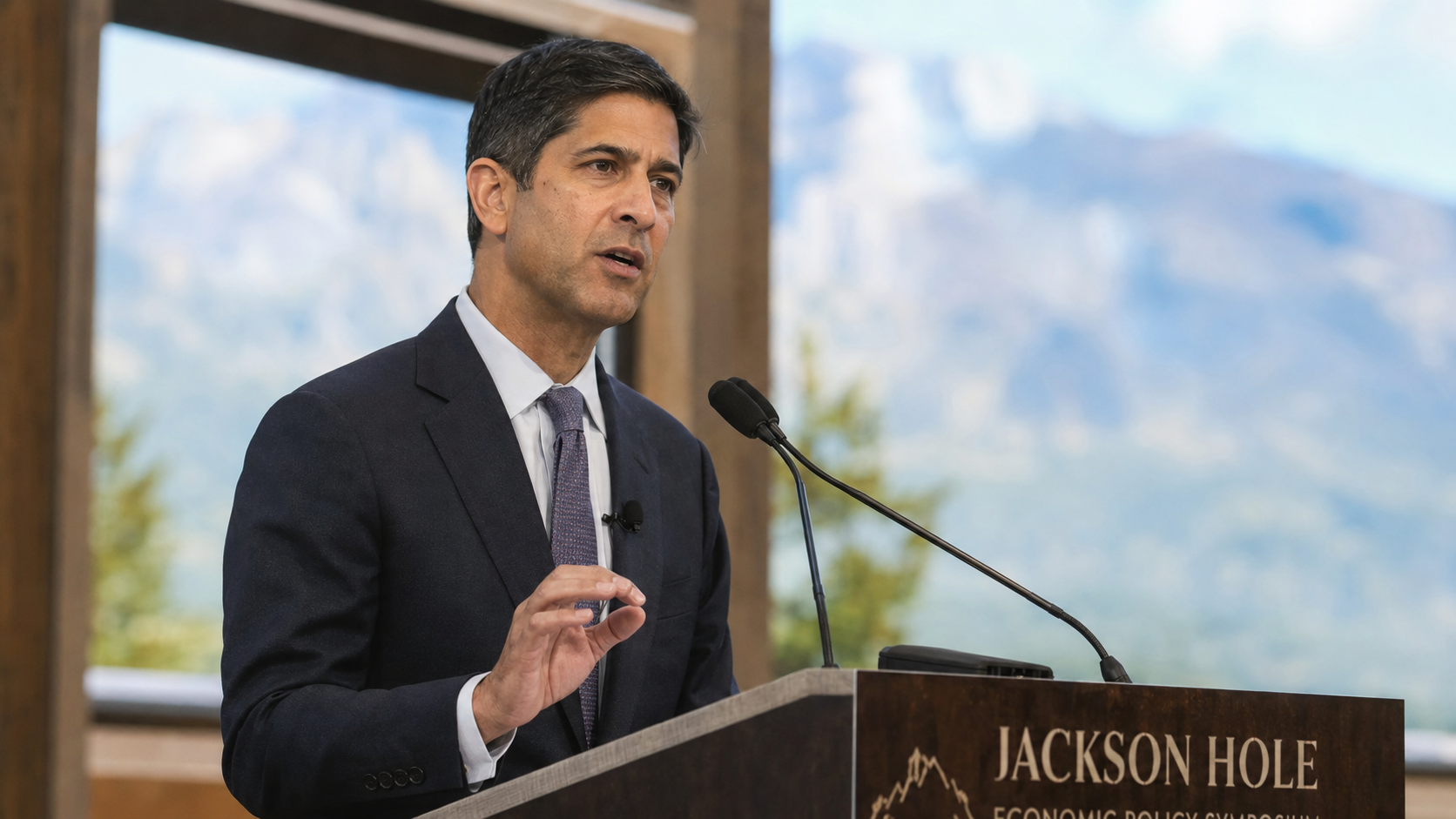
Kevin Warsh just delivered his first speech at Jackson Hole — the annual gathering of the world’s most powerful central bankers in the Wyoming mountains — and the message was unmistakable. The Fed is not done. And the housing market, which has spent the entire summer quietly correcting itself, is now staring down the possibility of a rate hike it did not need and did not earn.
Let’s talk about what actually happened, what it means, and why the people waiting for rates to fall are now facing a longer wait than they anticipated.
What Warsh Said at Jackson Hole
The speech was supposed to be ambiguous. After his July meeting press conference — which analysts described as providing “a muddy picture” about his willingness to raise rates — markets were looking to Jackson Hole for clarity.
They got it. Just not the clarity they were hoping for.
Warsh looked at this summer’s inflation data — which had, by most readings, been modestly encouraging — and said it gave him little comfort. Recent better-than-expected inflation reports, he said, “do not tell me that underlying trends have meaningfully improved.” He recommitted to the Fed’s 2% inflation target as the “predominant focus” of policy. He said financial conditions were showing “few signs of policy restraint.” And he delivered the line that sent markets moving: “We must be confident that underlying inflation is moving to our objective, clearly and at sufficient speed. Otherwise, we have work to do.”
That phrase — we have work to do — is Fed-speak for: we may need to raise rates.
The bond market heard it immediately. September rate hike odds jumped from below 40% to 60.4% within hours of the speech. Deutsche Bank — one of the most closely watched forecasters on Wall Street — now expects 50 basis points of total hikes before year-end, with increases at both the September and December Federal Open Market Committee meetings. Nomura said the sensitivity to near-term inflation data is “high.” Multiple banks brought forward their hike timelines within 48 hours of the speech.
The July meeting had already been what Warsh himself called “a good family fight” — a divided committee that chose to hold rates at 3.50%-3.75% despite significant internal pressure to move higher. Jackson Hole resolved that ambiguity. The hawks are in charge. And the September inflation data — the August CPI and PPI readings due in the next two weeks — will determine whether they act.
The Disconnect Nobody Is Talking About
Here is the thing that should be part of every real estate conversation right now, and rarely is.
The Federal Reserve sets one interest rate for the entire country. One blunt instrument applied to 330 million people, dozens of industries, and hundreds of local real estate markets, each operating under completely different conditions.
The housing market Warsh is preparing to hit with a potential rate hike is not the overheated housing market of 2021 and 2022. It is a market that has already been doing exactly what the Fed’s rate policy is designed to produce. Prices have fallen for eight consecutive months nationally. Days on market are at their longest point in six years. Consumer confidence is at a 70-year low. Price reductions are appearing on nearly one in five active listings. Buyers are deliberate, cautious, and moving in slow motion.
The housing market has already corrected. It did not need another push.
But the blunt instrument does not distinguish between an overheated market and one that is already adjusting. A rate hike is a rate hike. It raises the cost of borrowing for every buyer in every market, regardless of whether that market needed cooling.
This is the disconnect. The Fed is fighting a national inflation problem driven by energy prices, geopolitical conflict, and supply chain disruptions — none of which a rate hike directly addresses. And the housing market that bears the most immediate and visible impact of that hike is one that was already, quietly, doing the work on its own.
What a September Hike Would Actually Mean for Mortgage Rates
Let’s be precise about the mechanism, because the relationship between a Fed hike and your mortgage rate is not as direct as most people assume — but it is real.
The Fed’s rate hike directly raises the federal funds rate — the interest rate banks charge each other overnight. Mortgage rates are driven by the 10-year Treasury yield, which moves independently. But a Fed hike sends a clear signal to the bond market: inflation is still a problem, the Fed is serious, and the era of easy money is further away than you thought. Bond markets respond by pushing yields higher to reflect the new reality. And higher 10-year yields mean higher mortgage rates.
The 30-year fixed was sitting at 6.67% as of August 13th. A September hike — particularly if Deutsche Bank’s forecast of 50 basis points total by year-end is correct — puts the 30-year fixed on a path toward 7% or above. That is not a rounding error. On an $800,000 mortgage, the difference between 6.67% and 7% is approximately $200 per month — $2,400 per year — in additional carrying cost.
For buyers who have already been stretching to make the math work at current rates, that incremental increase is not abstract. It is the number that pushes a purchase out of reach, or back onto the shelf for another season.
What This Means for an Already Slowing Market
The honest answer to whether a Warsh rate hike will hurt an already cooling market is: yes. But the nature of that hurt depends on where you are and what you are doing.
Think of it this way. The housing market this summer has been like a car gradually applying its own brakes — slowing naturally, adjusting speed to road conditions, finding a new equilibrium. A Fed rate hike is someone else’s foot pressing the brake harder from the outside. The car slows faster than it needed to. The passengers lurch forward.
In purely discretionary markets — vacation home markets, second home markets, move-up markets driven entirely by desire rather than necessity — that additional pressure is meaningful. The buyer who was 80% of the way to a decision at 6.67% becomes 60% of the way there at 7%. The seller who had already adjusted expectations to match today’s reality now faces a buyer pool that has shrunk further.
In markets with structural supply constraints and necessity-driven demand — Boston’s urban core, the technology corridors of Seattle, the supply-starved suburbs of Long Island — the impact is real but more contained. Buyers who have to move still move. The leverage shifts further toward buyers, but transactions continue.
Cape Cod sits in the more vulnerable category. As a market that is almost entirely discretionary — nobody has to buy a vacation home — additional rate pressure compounds the consumer confidence problem that has already been slowing buyer decision-making all summer. The buyer from Wellesley, already cautious, considering a Cape Cod property, becomes even more cautious. The seller who thought they had time to wait now has less of it.
The Cruelest Irony of All
There is something deeply frustrating about this moment for anyone who has been closely watching the housing market.
The sellers who refused to adjust their prices in spring — who held out for 2024 numbers while the market moved past them — are now facing a potential rate hike that will further shrink their buyer pool. The price adjustment they resisted six months ago will now need to be larger to compensate for the reduced affordability resulting from a higher rate.
The buyers who waited all summer for rates to come down — who convinced themselves that patience would be rewarded with lower borrowing costs — are now watching those costs potentially rise. The window of maximum buyer leverage that existed in July and August, when rates were stable and competition was low, is closing.
And the Fed, in its infinite bluntness, is applying the same pressure to a Boston condo market that has already corrected as it is to a commercial real estate market in a Sun Belt city that may genuinely need restraint. One tool. Many markets. Imprecise by design.
What to Do With This Information
For sellers: the time to have adjusted your price was months ago. If that adjustment hasn’t happened yet, it needs to happen now — before a potential September hike removes more buyers from the pool and widens the gap between your expectations and the market’s reality. Strategic pricing is not optional in this environment. It is the only path to a transaction.
For buyers: the window of leverage that exists today — at 6.67%, in a market where sellers are motivated and competition is low — is genuinely better than the window that will exist if Warsh hikes in September and rates push toward 7%. The buyers who act now are buying ahead of that potential increase. Those who wait for clarity may find it costs them $200 a month for the life of their loan.
For everyone: stop waiting for the Fed to rescue the real estate market. Warsh has told you, clearly and repeatedly, that his job is price stability — not your mortgage rate, not your home value, not the housing market’s comfort. The market that exists today is the market you have. Act on it accordingly.
508-420-8800 · thegriffin.co
Griffin Realty Group serves buyers and sellers across the Boston metro and Cape Cod luxury real estate markets.


