 See photos and updates from listings directly in your feed
 Share your favorite listings with friends and family
 Save your search and get new listings directly in your mailbox before everybody else

Introduction: Is the American dream of owning a home slipping away for today’s youth? If you scroll through TikTok or headlines, you’ll see a rising chorus of fear: that homeownership is unattainable for Gen Z and even younger millennials. But does the data support this narrative? By examining homeownership trends over the past decade, particularly among adults under 30, we can begin to separate fact from fear.
Understanding the Generational Breakdown. To ground this conversation, let’s clarify our generational definitions:
- Millennials: Born 1981 to 1996 (aged 28–44 in 2024)
- Gen Z: Born 1997 to 2012 (aged 12–27 in 2024)
That means most Americans under 30 today fall into Gen Z, while the oldest millennials aged out of the under-30 bracket by 2026.
U.S. Homeownership Rates for Adults Under 30 (2015–2024)
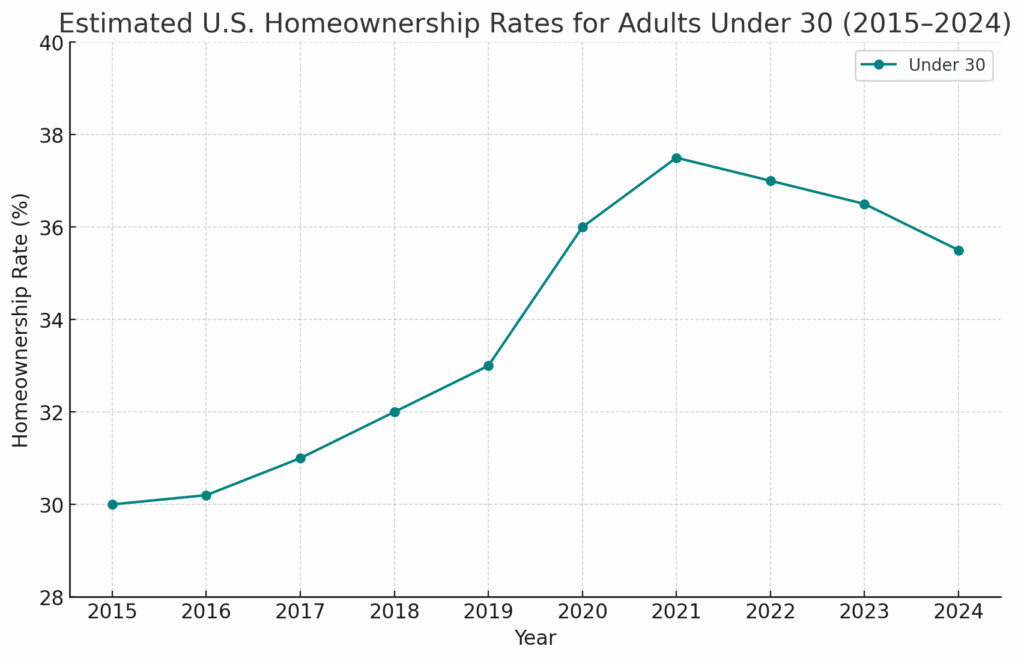
This graph shows that homeownership among Americans under 30 rose steadily from about 30% in 2015 to a peak of 37.5% in 2021. Since then, it has slipped modestly to around 35.5% in 2024. While there has been a recent decline, ownership levels remain higher than a decade ago.
Trend Insight: The overall trend over the past 10 years shows growth—not decline—in homeownership rates among younger adults. This increase reflects a post-2016 recovery fueled by low interest rates, remote work expansion, and delayed homebuying timelines among millennials.
Comparing Under-30 Homeownership Rates: Millennials vs. Gen Z
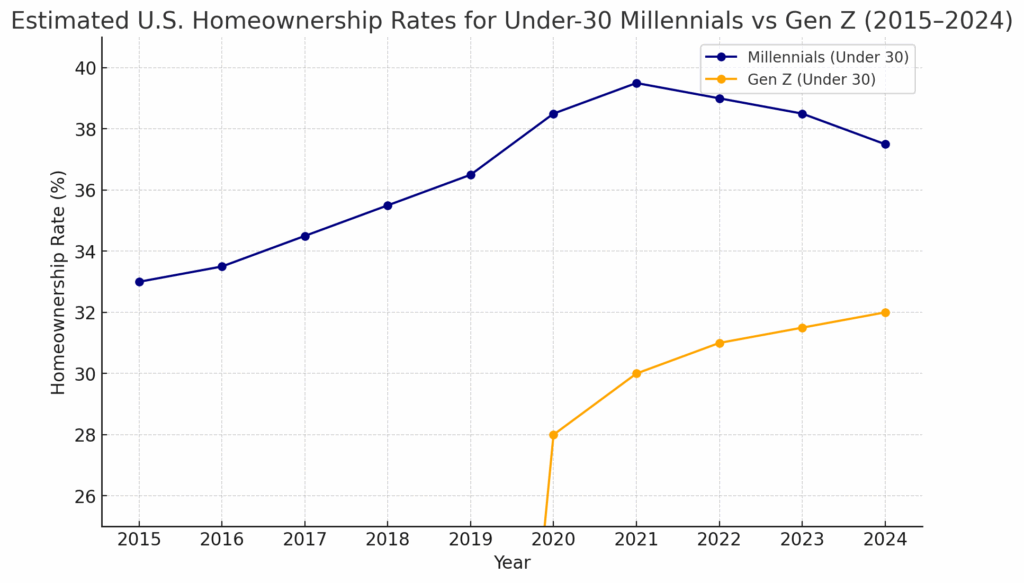
This comparison highlights how millennials, when they were under 30, reached a peak homeownership rate of around 39.5% in 2021 before their cohort aged out of this category. Gen Z’s rise is just beginning, with homeownership rates for this generation reaching around 32% by 2024 as older members turn 27.
Trend Insight: Although Gen Z’s homeownership rate is currently lower than that of millennials at the same age, it’s steadily increasing despite higher mortgage rates and tighter supply. This suggests that while housing affordability remains a challenge, younger buyers are still entering the market.
What’s Driving These Trends?
- Affordability Pressures: Rising home prices and interest rates have slowed recent gains.
- Family Support: Many Gen Z buyers rely on family help for down payments.
- Remote Work: Flexibility has enabled relocation to more affordable areas.
- Delayed Life Milestones: Marriage, career stability, and family formation are happening later, pushing homeownership later too.
Conclusion: The Narrative Needs Nuance. Homeownership is not vanishing for younger generations. It’s evolving. The data show that millennials made steady gains during their twenties, and Gen Z is starting to follow suit, albeit under different economic conditions. Rather than declaring the American dream dead, we should focus on how policies, education, and innovation can continue making homeownership more accessible.
The fear may be loud, but the facts are more balanced.


