 See photos and updates from listings directly in your feed
 Share your favorite listings with friends and family
 Save your search and get new listings directly in your mailbox before everybody else
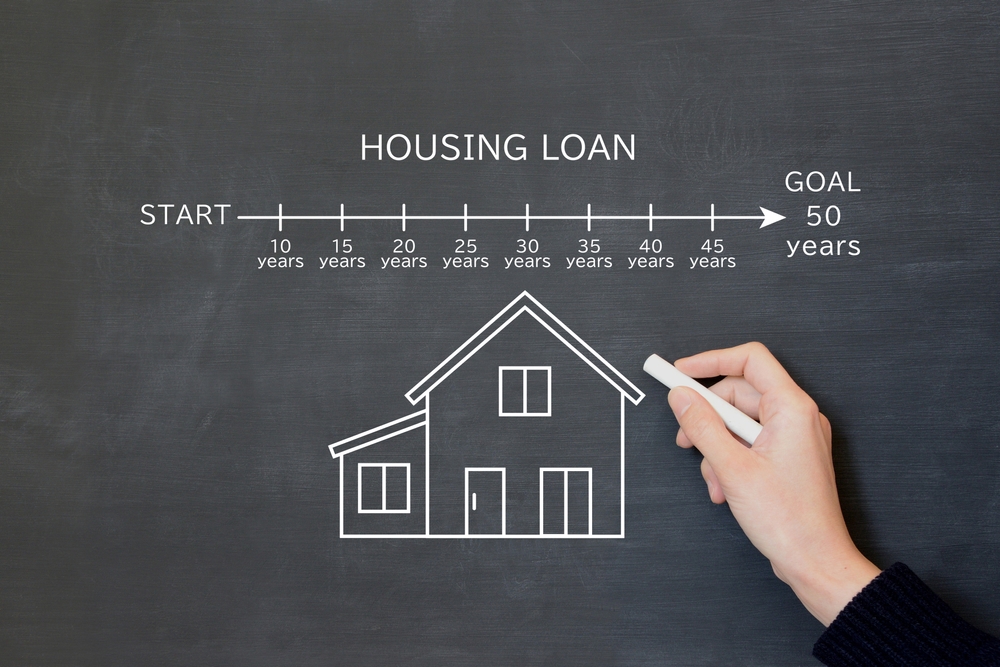
In short, a 50-year mortgage is simply a home loan with a repayment term of 50 years instead of the more common 30 years (in the U.S.). In some cases, the idea is being floated by policymakers (for example, the Donald Trump administration has recently proposed it) to improve housing affordability amid rising home prices and high mortgage rates.
Under a 50-year program, the borrower’s monthly payment (for principal + interest) is lower than it would be for a 30-year loan of the same size, because the same principal is amortized over more months. But that reduction in monthly payment comes with trade‐offs.
The proposal is still mostly theoretical and faces regulatory and practical hurdles (for example, many “qualified mortgages” in the U.S. are capped at 30-year terms).
The Pros
Here are the main benefits that advocates point to:
1. Lower monthly payments
By stretching the term, the monthly payment goes down (all else equal). For example, one analysis found that, for a 30-year vs. 50-year loan on a given amount, payments drop modestly (e.g., ~$2,455 vs. ~$2,171 in one scenario).
This makes buying appear more affordable — a helpful feature, especially in high‐cost markets or for first‐time buyers.
2. Increased purchasing power
Because the payment is lower, a borrower might qualify for a larger loan (or a higher‐priced home) than under a 30-year term. One estimate showed maybe a ~5% increase in buying capacity with a 50-year loan.
In markets like Boston/Cape Cod, where homes are expensive, this could matter.
3. Greater cash‐flow flexibility
A lower monthly payment frees up more cash for other things: savings, investments, maintenance, and emergencies. For someone stretching in today’s environment (high interest rates + housing affordability pressures), that can be attractive. Some commentary argues that this could “open the door” to homeownership when it would otherwise be impossible.
4. Possible strategic use
If someone plans to refinance or move in 5-10 years, they might view the 50-year as a “bridge” — get a lower payment now, then later shift to a shorter term or higher payment when their income grows. Some articles suggest that for younger borrowers or in high‐price markets, this might make sense.
The Cons
But there are many essential drawbacks — perhaps even deal-breakers for many homeowners. Here are the major ones:
1. Much higher total interest cost
Because you’re paying for 50 years instead of 30, interest accumulates for longer, and you pay more total interest. For example, one comparison: for a $400,000 loan with interest at ~6.5%:
- 30-year: ~$910,178 total paid (≈ $400k principal + ~$510k interest)
- 50-year: ~$1,352,000 total paid (≈ $400k principal + ~$952k interest)
- Hence, the “foot in the door” comes at the cost of paying hundreds of thousands more in interest over the life of the loan.
2. Equity builds much more slowly
With a 50-year amortisation, you pay off principal more slowly (especially in the early years), so your home equity accumulates more slowly. Some data: after the term ends for a 30-year borrower, you might owe $0; for a 50-year borrower under the same scenario, you still owe a large remaining balance. For instance, one article states: “when the 30-year mortgage is paid off, the 50-year homeowner still owes $378,000” in their model.
This means if you sell after, say, 10‐15 years, you have built much less equity than you would have under a shorter term. That limits wealth accumulation via homeownership.
3. Increased risk of negative equity or being “underwater”
If home values fall or stagnate, a slower‐amortising loan increases the risk that you owe more than the home is worth (negative equity) because principal isn’t paid down as fast. Some analysts warn that this risk is meaningful.
4. Your mortgage extends into older age
A 50-year term means your loan payment might stretch well into your 60s, 70s, or beyond. For example, if a first-time buyer is 40, a 50-year loan would end at age 90. Most experts expect repayment obligations (and other costs such as maintenance, taxes, and insurance) to be lighter in retirement; this structure works against that.
It raises the question: Is this still “owning” your home or more like long‐term renting (with less control over your future)? Some argue it changes the fundamental character of home ownership.
5. Higher interest rates/lender risk / regulatory hurdles
Because a longer term is riskier for lenders (duration risk, credit risk), interest rates on a 50-year loan would likely be higher than on a 30-year loan. One article suggests an additional ~0.4-0.6% interest premium.
Also, current U.S. “Qualified Mortgage” (QM) rules (under the Dodd‑Frank Wall Street Reform and Consumer Protection Act) generally cap terms at 30 years; changing this requires regulatory and possibly legislative action.
6. Might worsen the affordability problem by inflating prices
A structural risk: if more people can “qualify” for higher-priced homes (thanks to lower payments) but the supply of homes doesn’t increase, then competition intensifies and home prices could rise further — undermining affordability. Several analysts point this out: the root problem in many markets is a supply constraint, not just financing.
In your markets (Boston / Cape Cod), where supply is already tight, this risk may be significant.
7. If you move or refinance early, you may not benefit
Many homeowners don’t remain in the same house for 50 years; if you sell or refinance earlier, you might have built very little equity, and thus the benefits of the lower payment are muted while the costs (a slower principal paydown) remain. One article notes that the average ownership duration is well below 50 years.
What It Means for Buyers in High‐Price Markets (e.g., Boston / Cape Cod)
Given your real estate background in Boston and Cape Cod, a few additional nuances apply:
- In high‐price/low‐supply markets, affordability is strained because home prices have grown faster than incomes. The lower payment of a 50-year loan may help some buyers get in — but if that leads to higher bids and rising prices, the net benefit may vanish.
- Because home price appreciation has been strong in these markets, slower equity build‐up is a meaningful cost: you might be relying more on appreciation (and less on amortisation) to generate gains. If appreciation chills, the slower amortisation is a real drag.
- From a risk standpoint, if you carry a home into retirement with a large outstanding balance (because of the long term), you may face greater financial stress (taxes, maintenance, insurance, rising interest rates) — something to consider for your own planning or for clients.
- Also, many of your clients view homeownership as a path to wealth building. The slower equity accumulation implicit in a 50-year loan conflicts with that narrative.
My Take / Verdict
In my view, while the 50-year mortgage proposal has merits (especially in an environment of high prices and funding strain for first‐time buyers), the drawbacks are substantial and likely to outweigh the benefits for many typical buyers — especially those who:
- Plan to stay in the home for less than many years,
- Intend to build meaningful equity,
- Want to finish paying off their mortgage before retirement.
It makes sense in particular scenarios: a younger buyer in a costly market who expects to refinance when rates drop or expects income to rise, and who explicitly accepts the trade-offs. But as a broad policy tool, I’m skeptical it will deliver the affordability gains touted—unless accompanied by supply-side reforms (increased construction, zoning reform) and robust protections/education for borrowers.
For your real‐estate work, you might flag this as a “tool with caution”: Good to know as an option, but one that requires careful modelling of long‐term cost, equity growth, and exit strategy — rather than simply focusing on the monthly payment.
Key Questions Buyers Should Ask
If a 50-year mortgage becomes available and a client is considering it, consider having them ask:
- What will my monthly payment be compared to a 30-year term, all else equal?
- What interest rate premium (if any) applies to the 50-year term compared to a 30-year term?
- After 10, 20, and 30 years into the 50-year loan, how much equity will I have compared to a 30-year loan?
- If I move or refinance in 10 or 15 years, what is my likely equity position, and how does that compare to a 30-year term?
- Does this loan make sense with my retirement plans? Will I still be paying a mortgage when I retire?
- What happens to my loan if home prices go down — how much risk do I bear of being underwater?
- Are there alternative ways to reduce monthly payments (e.g., a larger down payment, buying a smaller home, adjustable‐rate options, amortisation options) that might achieve similar cash‐flow relief without the long-term drag?
Conclusion
The 50-year mortgage is an interesting idea — stretching amortisation to make payments more manageable in a challenging housing-cost environment. But it is not a panacea. The magic number of “50 years” entails significant trade-offs: higher total cost, slower equity accumulation, a longer debt burden, higher lifetime interest, and potentially greater risk.


